




Request a video call
Confirm Your Virtual Consultation
CellCenter - Regenerative Medicine Center Profile Overview
You’ve Tried the Usual Treatments. Now What?
If you are considering stem cell therapy abroad, you have most likely lived with a difficult condition for some time. You may be caring for someone you love who is.
That decision deserves clear, honest information, and I want to give you exactly that. Below, I explain what CellCenter offers, what is confirmed, what remains uncertain, and the questions I would want answered before committing.
You may be exploring this option because:
- Multiple sclerosis, Parkinson’s disease, stroke, spinal cord injury or cerebral palsy continues to affect mobility, speech or independence
- Joint pain or osteoarthritis persists despite medication, injections or physiotherapy
- Rehabilitation progress after a brain or spinal injury seems to have plateaued
- You are a parent looking at every responsible option for a child with a neurological condition
- Cell-based treatment is not available, not covered, or only offered through limited clinical trials where you live
- You want to understand what a licensed provider in the European Union can and cannot offer you
Questions you may already have asked:
- “Where can I get stem cell therapy in Bratislava, Slovakia?”
- “Is there a stem cell clinic in Europe that treats multiple sclerosis?”
- “Can umbilical cord stem cells help with stroke recovery?”
- “Is stem cell treatment an option for cerebral palsy or autism?”
- “How much do stem cells for knee osteoarthritis cost?”
- “How do I know if a stem cell center is properly licensed?”
Let’s Start With Where You Are Today
Most people begin looking into cell-based treatment when a long-term condition keeps limiting daily life despite good conventional care. See which of these reflect your situation; they will help you frame the right conversation with any medical team.
What You’re Living With
- Weakness, spasticity, balance problems or loss of coordination
- Difficulty with speech, swallowing, memory or concentration
- Chronic joint pain, stiffness or reduced range of motion
- Relapses, fatigue or ongoing inflammation from an autoimmune disease
- Slow or incomplete recovery after a stroke, brain injury or spinal cord injury
How It’s Showing Up in Your Everyday Life
- Needing help with walking, dressing, bathing or eating
- A reduced ability to work, drive, study or care for your family
- Caregivers feeling exhausted and under financial pressure
- More appointments, more medicines and more time spent managing your health
- A sense that time is passing while function continues to decline
What You’ve Probably Tried So Far
- Disease-modifying or symptom-control medicines from a specialist
- Physiotherapy, occupational therapy and speech therapy
- Pain management, joint injections or bracing
- A surgical consultation for joint or spinal problems
- Nutrition, lifestyle or structured rehabilitation programs
- Screening for clinical trials in your home country
Why Cell Therapy Might Be on Your Mind
- Standard treatments have not delivered the improvement you hoped for
- A specialist has told you there are no further approved options
- You do not qualify for, or cannot reach, a local clinical trial
- You have heard about treatment abroad from other patients or support groups
- Your family wants to act while travel is still manageable
The Questions You’re Right to Ask
- Is there reliable evidence that cell-based treatment helps my specific condition?
- Which cells would I receive, where do they come from, and how are they tested?
- Is this treatment authorised, part of a registered trial, or offered under another legal basis?
- What are the risks of an intravenous or intrathecal procedure for someone in my situation?
- Should I continue my current medicines and rehabilitation?
- How will my doctors at home be kept informed?
Could Stem Cell Therapy Be Right for You?
I want to be direct with you here. Unlike established surgery, most stem cell treatments offered for neurological, autoimmune, joint and anti-aging purposes do not have universally accepted eligibility criteria, because many of these uses are still being studied. That is exactly why your individual medical review matters so much. A responsible team should tell you what is known, what is uncertain, and what a realistic outcome looks like for your diagnosis and stage.
What current regulatory and scientific guidance says:
- The European Medicines Agency (EMA) advises you to ask your healthcare professional about the benefits and risks of any cell-based treatment, and which authority has approved it
- EMA and the Heads of Medicines Agencies state that advanced therapy medicinal products should be authorised or approved by a regulator before they are offered to patients
- The International Society for Stem Cell Research (ISSCR) encourages you to ask for published evidence, details of how the cells are prepared, and whether the treatment is part of a registered clinical trial
A responsible medical team should also review:
- Your confirmed diagnosis, disease stage, recent imaging and specialist reports
- Your current medicines, especially immunosuppressants, blood thinners and disease-modifying therapies
- Any active infection, history of cancer, bleeding disorder or pregnancy
- Heart, lung and anesthesia risks, particularly if sedation or an intrathecal injection is planned
- Whether you, or your child, can travel and tolerate the procedures safely
- Your expectations and how improvement will actually be measured
- Your access to ongoing rehabilitation and specialist follow-up at home
Your treatment may need to be postponed if:
- Your diagnosis is uncertain or a treatable cause has not yet been ruled out
- An infection, uncontrolled medical condition or recent relapse needs to be stabilised first
- Proceeding would mean stopping a treatment that is already working for you
- There is no safe plan for monitoring, emergency care or follow-up once you return home
Important: Another patient’s improvement, an accessible price or an available date does not make you a suitable candidate. Please do not stop any prescribed treatment without first speaking to your own specialist.
So, Is CellCenter a Good Fit for You?
CellCenter may be worth considering if you are comparing licensed European options for a chronic neurological, joint or autoimmune condition. Before you decide, I recommend confirming four things: the exact cell product and its legal basis, the evidence for your diagnosis, the credentials of the doctor treating you, and a written follow-up plan your doctors at home have agreed to.
Cell Center Overview
- Locations: Mlynské nivy 5/A, Bratislava and Duklianskych hrdinov 34, Malacky
- Focus: Stem cell therapy and longevity programs
- Licensed cell sources: Your own fat tissue, or donated umbilical cord
- Prices: About $4,900–$8,700 USD
- Key decision: What evidence supports treatment for your condition?
About CellCenter
CellCenter operates from two locations in western Slovakia: a clinic at Mlynské nivy 5/A, 821 09 Bratislava, and a facility at Duklianskych hrdinov 34, 901 01 Malacky, inside the Nemocnica s poliklinikou Malacky hospital building roughly 40 km north of the capital. Its medical director and professional guarantor is MUDr. Milan Hric, a surgeon with more than three decades of clinical experience.
The clinic holds a Slovak Ministry of Health decision (No. S03319-OP-2017, dated 27 September 2017). It permits the operator, Blue Horizon International, a.s., to run a tissue establishment at the Malacky site for procuring, testing, processing, preserving, storing and distributing specified human cells. What matters for you is not the certificate on its own. What matters is whether the cell product proposed for you falls within that scope, and whether it is being used under the right regulatory pathway for your condition.
| Key fact | What is confirmed | What you should verify |
|---|---|---|
| Tissue establishment permit | Ministry of Health decision S03319-OP-2017 authorises tissue establishment activities at the Malacky site, with surgery named as the professional focus. | Ask whether the permit is still current, and whether it also covers treatment in Bratislava or only in Malacky. |
| EU tissue establishment code | The permit lists EU code SK008542, assigned by Slovakia’s National Transplant Organisation. | You can check this code yourself in the European Commission’s EU Coding Platform. |
| Licensed cell types | Adipose stromal vascular fraction and adipose MSCs for autologous use; umbilical cord tissue and cord blood MSCs for allogeneic use. | Ask which cell type, dose and number of doses you would receive, and whether the cells are expanded in culture. |
| Regulatory pathway | A tissue establishment permit governs how cells are procured and handled. Under EU law, many processed cell products are regulated separately as advanced therapy medicinal products. | Request written confirmation of whether your treatment is an authorised medicine, part of a registered trial, or provided under another national legal basis. |
| Hospital setting | The Malacky facility sits within a hospital building, and the permit names a cooperating laboratory for tissue testing. | Confirm what emergency, imaging, anesthesia and inpatient support is available to you on your treatment day. |
A licence confirms that a facility meets the requirements for handling human cells. It does not prove that a treatment works for a particular disease, and it cannot guarantee your individual result.
What Can CellCenter Actually Help With?
CellCenter offers treatment across the areas below. The strength of the scientific evidence varies considerably from one condition to another, so judge any proposed plan on the evidence for your own diagnosis. I have laid this out to help you compare, not to recommend a particular option.
| Treatment area | Conditions treated |
|---|---|
| Neurological Brain and nervous system |
Autism, Alzheimer’s, Parkinson’s, ALS, multiple sclerosis, ataxia, neuropathy, cerebral palsy, stroke, brain and spinal cord injury. |
| Musculoskeletal Joints, bone and muscle |
Arthritis, osteoarthritis, sports injuries, muscular dystrophy. |
| Autoimmune Immune system |
Lupus, rheumatoid arthritis, multiple sclerosis. |
| Endocrine & cardiovascular | Diabetes, diabetic foot, thyroid disorders, cardiovascular disease. |
| Digestive & respiratory | Crohn’s disease, ulcerative colitis, cirrhosis, COPD, asthma, cystic fibrosis, post-COVID symptoms. |
| Longevity & anti-aging | Systemic cell therapy for vitality and healthy aging; aesthetic skin applications; infertility. |
Where Do the Cells Come From, and How Are They Given?
| Element | What it means for you | Questions to ask |
|---|---|---|
| Your own fat-derived cells Autologous |
Cells are taken from your own fat tissue through a minor harvesting procedure. | Will I need liposuction or another harvest? What anesthesia is used? Are the cells processed the same day or cultured? |
| Donated umbilical cord MSCs Allogeneic |
Donor cells from umbilical cord tissue or cord blood, so you avoid a harvesting procedure. | How are donors screened? What infection and sterility testing is done? Can I see the certificate of analysis for my batch? |
| Intravenous (IV) | Cells are infused into a vein and circulate through your body. | How will allergic reactions, fever and clotting risks be monitored during and after the infusion? |
| Intrathecal | Cells are injected into the spinal fluid through a lumbar puncture, with anesthesia support. | Who performs it, under what sedation, and what is the plan if I develop headache, infection or neurological symptoms? |
| Complementary therapies | The clinic also offers hyperbaric oxygen therapy, IV drip therapy and PRP. | Are these included or charged separately, and what evidence supports each one for my condition? |
Who Will Be Taking Care of You?
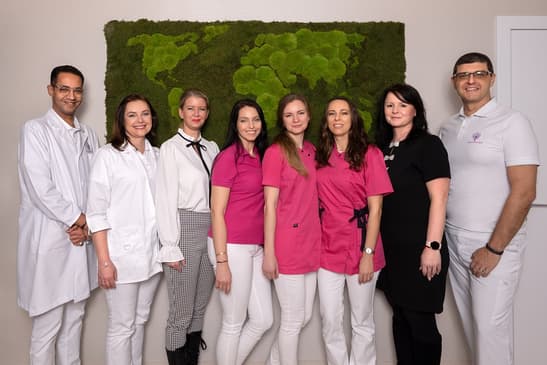
These are the clinicians CellCenter identifies as part of its team. Their backgrounds are summarised below. Keep in mind that the doctor responsible for your care should always be confirmed in writing before you travel.
Before You Pay Anything, Check These
- The full name and current Slovak Medical Chamber registration of the physician treating you
- The legal basis for your specific cell product and condition, stated in writing
- The cell source, dose, number of administrations and delivery route
- Donor screening and batch testing, if you will receive donor cells
- Outcome and side-effect data for patients with your condition
- Who is responsible for your emergency care, and how concerns or complaints are handled
Hearing From Other Patients: How to Read Their Stories
CellCenter shares several patient stories. They include two young children recovering from near-drowning brain injuries and a 60-year-old man recovering after a stroke. The families describe meaningful progress: learning to walk with support, communicating more, and regaining independence. In each case, stem cell injections were combined with intensive rehabilitation and, in some cases, hyperbaric oxygen therapy. These stories are genuinely moving, and I think it helps to read them with a clear sense of what they show.
Where These Stories Really Help
- A sense of the patient experience and the care environment
- An understanding of how cell treatment is combined with rehabilitation
- Examples of practical support, such as transport between the clinic and hotel, which one patient review mentions
What They Can’t Tell You
- Whether the improvement came from the cells, natural recovery, rehabilitation or other therapies
- How many patients did not improve or experienced side effects
- What outcome you can expect with a different condition or stage
Let’s Be Honest About the Risks and the Evidence
Mesenchymal stromal cells are an active area of research, and some small studies report encouraging signals in selected conditions. Still, you should know that for most conditions treated at private clinics, high-quality evidence of lasting benefit remains limited. EMA reports that people using unproven or unregulated cell-based therapies have suffered serious and sometimes fatal side effects, including infections, immune reactions, tumour formation, vision loss and bleeding in the brain. Asking detailed questions is the best way to protect both your health and your finances.
| Time period | Potential concerns | Questions to ask |
|---|---|---|
| Procedure day | Allergic or infusion reactions, fever, sedation complications, bleeding or pain at a harvest or injection site. | Who will monitor my vital signs? What resuscitation equipment and hospital backup are immediately available? |
| First days to weeks | Headache after a lumbar puncture, infection including meningitis, worsening neurological symptoms, blood clots, or seizures in susceptible patients. | How long should I stay nearby? Which symptoms need urgent care, and who do I call? |
| Long term | Uncertain durability of any benefit, unknown long-term effects of donor cells, the cost of repeat treatment, and delays to proven care. | How will my progress be tracked at 3, 6 and 12 months? Will my specialist at home receive a full treatment report? |
Seek urgent medical care if you develop a high fever, a severe or worsening headache, a stiff neck, confusion, seizures, new weakness or numbness, loss of vision, difficulty breathing, chest pain, marked leg swelling or signs of an allergic reaction. If your symptoms could point to infection, bleeding or a blood clot, go to a local emergency service right away rather than waiting for a reply from the clinic.
What Your Journey Will Look Like, Step by Step
Here is how I would expect a responsible treatment pathway to unfold for you as an international patient. Exact timing depends on your condition, the cell source, the delivery route and your overall health. Please do not treat a travel booking as medical clearance.
Starting Point
Get Clear on What You’re Hoping For
Review your confirmed diagnosis, current treatments, day-to-day limitations and what a realistic, meaningful improvement would look like for you.
Initial Research
Have a Chat With Your Own Doctor First
Ask your neurologist, rheumatologist or orthopedic doctor about the evidence, possible interactions with your current treatment, and whether a clinical trial could be an alternative.
Before Travel
Send Over Your Medical Records
Send specialist letters, MRI or other imaging, recent blood tests, your medication and allergy lists, and details of any previous procedures or cell treatments.
Clinical Review
Let the Team Review Your Case Remotely
CellCenter’s physicians review your suitability, your risks, the proposed cell source and delivery route, and whether you need further tests before traveling.
Decision Stage
Talk One-on-One With Your Doctor
Discuss the evidence for your condition, realistic expectations, the legal basis of the treatment, known risks, how progress will be measured, and what happens if you do not improve.
Planning Stage
Get Everything in Writing
Confirm the treating team, cell product, dose and route, number of sessions, inclusions and exclusions, cancellation terms, complication costs, transfers and your follow-up schedule.
Arrival in Slovakia
Meet the Team and Give Your Consent
Once you arrive through Bratislava or Vienna airport, you complete an examination, screening tests and informed consent, and the team confirms it is medically appropriate to proceed.
Treatment
Treatment Day and Close Monitoring
Depending on your plan, this may involve tissue harvesting, an IV infusion, an intrathecal injection or a local injection, followed by close observation of your vital signs and neurological status.
Early Recovery
Take It Easy Before Heading Home
Before you leave, make sure you have a written treatment summary, a list of warning signs, emergency contacts, activity guidance and a clear date when travel is considered safe.
After Returning Home
Keep Up Your Care Once You’re Back
Keep taking your prescribed medicines and continue therapy. Share the treatment report with your local doctors, track your function objectively, and seek urgent local care if any warning signs appear.
Travel-safety reminder: Long flights and limited mobility raise your risk of blood clots, especially if you live with paralysis or have just had a procedure. Ask your treating team when it is safe to fly and whether you need compression stockings or other preventive measures.
What Will This Really Cost You?
A price only means something when you know exactly what it covers. Your total will depend on your condition, the cell source, the dose, how many administrations you need, the delivery route, anesthesia, testing, length of stay and any additional therapies. The figures below are the clinic’s current prices, and you should treat them as starting points rather than guaranteed totals.
How Much Treatment Costs for Your Condition
| Treatment | Price (USD) | What you should know |
|---|---|---|
| Anti-aging / longevity | From $4,900 | Covers evaluation, blood panels, systemic cell administration and a follow-up plan. Flights, hotel and meals are extra. |
| Cerebral palsy | $5,400 | The lowest neurological price. Confirm the number of doses and the delivery route. |
| Endocrine, cardiovascular, respiratory | From $6,000–$6,400 | Starting prices; your final quote depends on your diagnosis and testing needs. |
| Musculoskeletal | From $6,500 | Ask whether one or several joints are included, and whether imaging guidance costs extra. |
| Digestive tract / autoimmune | From $7,100 / $7,900 | Starting prices; request a personalised breakdown. |
| Parkinson’s, stroke, spinal cord injury, brain injury, muscular dystrophy | $8,100 | For stroke, delivery may be IV or intrathecal. Intensive physical or speech therapy after injection is not included. |
| Autism | $8,300 | Uses umbilical cord MSCs. Includes processing, care, airport transfers from Vienna or Bratislava and meals during the hospital stay. Accommodation is extra. |
| Multiple sclerosis, ataxia, neuropathy | $8,700 | The highest listed price. |
You may also see the clinic compare its prices with figures of roughly $15,000–$40,000 in the United States and $15,000–$22,000 or more in Germany or Switzerland. Those are the clinic’s own estimates. In many countries, similar cell treatments are available mainly through clinical trials rather than as paid services, so the comparison is not like-for-like.
What Your Quote Needs to Spell Out
| Cost area | Confirm as included or excluded | Why it matters to you |
|---|---|---|
| Cell product | Cell source, cell count, number of doses, laboratory processing and batch testing. | The clinic notes that the final price can change with cell count and diagnostic needs. |
| Procedure fees | Physician, anesthesia, harvesting, imaging guidance, facility and hospital stay. | Intrathecal delivery and sedation can involve resources you will not see in a headline price. |
| Travel and support | Airport transfers, hotel, meals, caregiver costs, interpreters and local transport. | If you are traveling with a child or a wheelchair user, you will often need a longer stay and accessible accommodation. |
| Additional therapies | Hyperbaric oxygen, IV drips, PRP, rehabilitation sessions and repeat treatments. | Add-ons can increase your total considerably, and each has its own evidence and risks. |
| Complication care | Hospital admission, imaging, infection treatment and extended stay. | Insurance often excludes experimental treatment and any complications that follow. |
I recommend asking for a complete, personalised estimate in writing. It should say whether repeat sessions are expected, how refunds work if treatment is cancelled for medical reasons, and who pays if complications arise.
Getting Ready for Your Trip to Slovakia
How You’ll Get There
You can fly into Bratislava airport (BTS) or Vienna International Airport (VIE), which is about 60 km away and offers more long-haul connections. Malacky is a short drive north of Bratislava on the D2 motorway.
Visas, Entry and Money
Slovakia is part of the EU and the Schengen Area, and it uses the euro. Check the current entry rules and any ETIAS or visa requirements for your nationality well before you book.
Will Language Be a Problem?
Slovak is the local language, and the clinic has English-, Arabic- and Slovak-speaking staff. For your consent discussion, make sure a qualified interpreter is available if you need one.
Frequently Asked Questions
What conditions does CellCenter treat with stem cells?
CellCenter treats neurological conditions such as autism, Parkinson’s, ALS, multiple sclerosis, stroke, cerebral palsy and spinal cord injury. It also treats musculoskeletal, autoimmune, endocrine, cardiovascular, digestive and respiratory conditions, and offers longevity programs. Please keep in mind that a condition being treated is not the same as the treatment being proven effective for it.
Is CellCenter licensed in Slovakia?
Yes. CellCenter holds a Slovak Ministry of Health permit to operate a tissue establishment at its Malacky site, with EU tissue establishment code SK008542. I recommend confirming that the permit is still current and asking separately about the legal basis for the specific treatment proposed for you.
What types of stem cells would I receive?
The clinic’s permit covers two sources. The first is cells from your own fat tissue, either stromal vascular fraction or mesenchymal stem cells. The second is mesenchymal stem cells from donated umbilical cord tissue and cord blood. Your physician should explain which source is recommended for you, and why.
Is stem cell therapy proven to work?
For most conditions treated at private clinics, the evidence is still limited and largely investigational. Some patients report improvement, but results vary and are hard to separate from rehabilitation or natural recovery. Ask for published data that relates specifically to your diagnosis.
Who are the doctors at CellCenter?
The team is led by medical director MUDr. Milan Hric. It also includes anesthesiologist MUDr. Mgr. Karim Dakkak, quality manager Mgr. Emilia Vlcek, regenerative physician MUDr. Noufel Aljushaah and clinical researcher MUDr. Zuzana Rendekova. Confirm your treating physician in writing and verify their registration independently.
How much will my treatment cost?
Prices range from about $4,900 for longevity treatment to $8,700 for conditions such as multiple sclerosis. Flights, accommodation, additional therapies and complication care are usually extra, so ask for a full written quote before you commit.
Will my insurance cover it?
Most insurers do not cover investigational cell therapy. Check your policy carefully, including whether your travel or medical insurance would cover complications from elective treatment abroad.
What should I ask before I commit?
Here is what I would ask:
- Which authority approved the treatment?
- Which cells, and what dose, will I receive?
- How are the cells tested?
- What are the risks of the delivery route?
- What evidence exists for my condition?
- Who handles emergencies?
- How will my results be shared with my doctors at home?
Want to Find Out If This Could Work for You?
Share your medical records for a personalised review. You will receive a clear written explanation of your suitability, the proposed cell product, who would treat you, the expected costs and how your follow-up would work, so you can make this decision with confidence.
Request Your Personalized ReviewDisclaimer
This information is educational and does not replace an evaluation, diagnosis or advice from a licensed clinician who knows your medical history. Many stem cell treatments remain investigational, carry real risks, and cannot guarantee improvement. Licences, medical staff, prices, treatment options and travel arrangements can change, so please verify them directly before making any medical or financial commitment. Do not stop a prescribed treatment without talking to your doctor, and seek urgent local medical care if your symptoms become severe or worsen quickly.
Referrences
- CellCenter — Clinic overview, treatments and medical team
- CellCenter — Treatment prices
- Slovak Ministry of Health — Tissue establishment permit S03319-OP-2017 (page 1)
- Slovak Ministry of Health — Permit scope, licensed cell types and EU code (page 2)
- MUDr. Milan Hric — Professional background
- CellCenter — Stroke treatment program inclusions and exclusions
- CellCenter — Longevity treatment program
- European Commission — EU Coding Platform for tissue establishments
- European Medicines Agency — Advanced therapy medicinal products overview
- European Medicines Agency — Warning against unproven cell-based therapies
- EMA and HMA — Unregulated advanced therapy medicinal products pose serious risks
- ISSCR — Nine things to know about stem cell treatments
- U.S. FDA — Consumer alert on regenerative medicine products
- EU Clinical Trials Information System — Search registered trials
- ClinicalTrials.gov — Search registered trials
- CDC — Blood-clot risk and long-distance travel
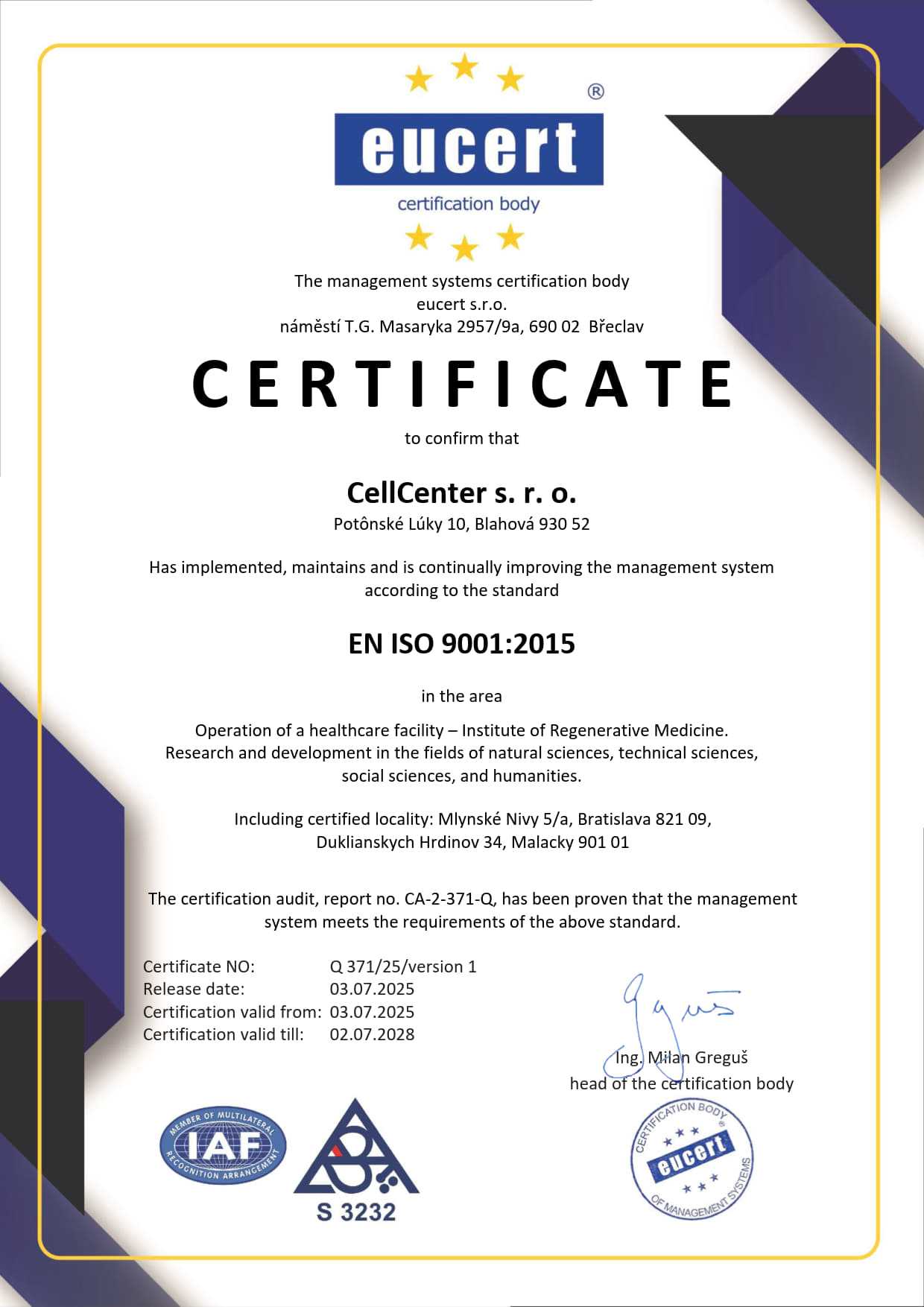
CellCenter - Regenerative Medicine Center Certificates
Location

About Medical Center
- Speciality: Stem Cell Therapy for Longevity
- Location: Mlynske nivy 5/A, 821 09 Bratislava, Slovakia , Duklianskych Hrdinov 34, 901 01 Malacky, Slovakia , Bratislava, Malacky , Slovakia
- Overview: CellCenter in Slovakia provides stem cell therapy for neurological and neuromotor disorders, cardiovascular and autoimmune conditions, musculoskeletal issues, post-traumatic injuries, and anti-aging c











Share this listing